BlazeStack.
Fire investigations are legally consequential, time-sensitive, and procedurally complex. BlazeStack needed a platform that could handle the full weight of that complexity (multi-step documentation, chain of custody, K-9 logs, arrest records) without slowing down investigators in the field. We designed a system where thoroughness and speed coexist.
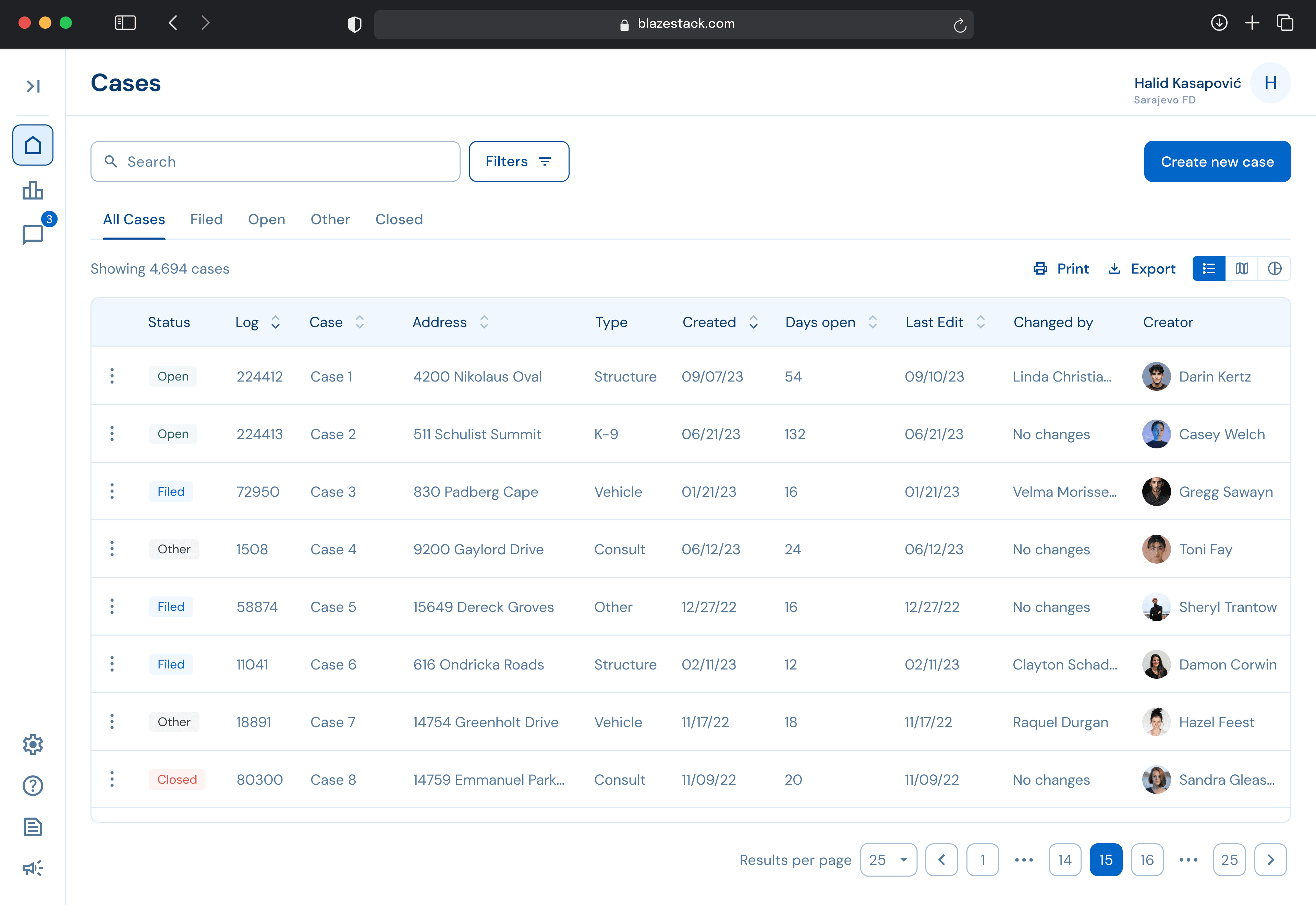
Fire investigators needed documentation tooling that could match the legal weight and procedural complexity of their work, without slowing them down in the field.
UX Design and component library. Led all UX decisions and structured the design system documentation alongside Ademir's visual direction.
Designed a comprehensive design system which led to a more efficient and faster development process by 20%
Complex case files with 10-15 tabs restructured into focused, sequential sections, reducing cognitive load and making thorough documentation achievable under field conditions
Adopted by 8+ fire departments, with investigators reporting it has "saved countless hours on report writing"
Auto-save across all case tabs eliminated lost progress for investigators moving between the field and office
Designing for the Complexity of Fire Cases
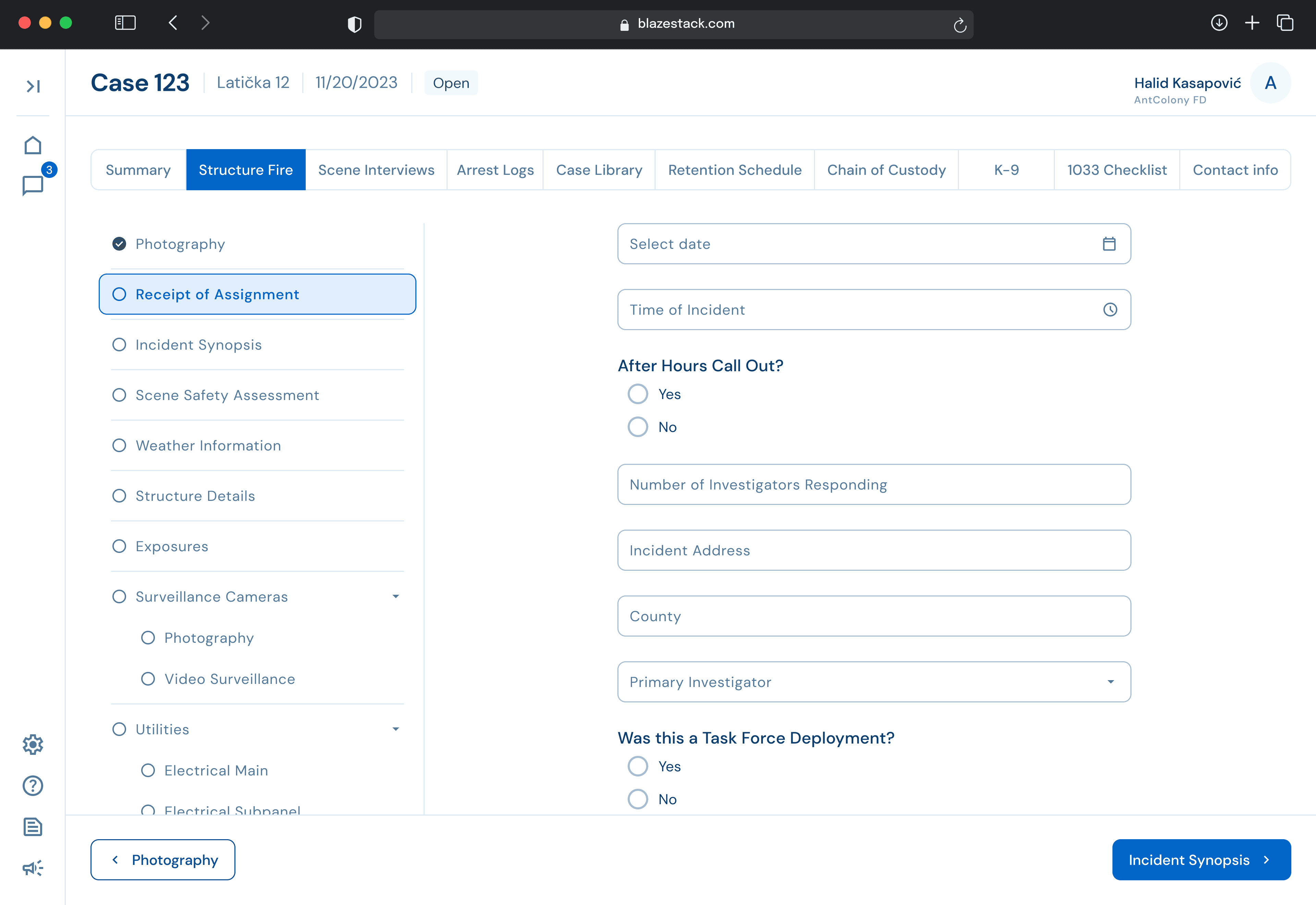
A full fire investigation case spans a significant amount of documentation: scene interviews, arrest logs, chain of custody, K-9 involvement, 1033 checklists, and more. Rather than presenting all of this at once, we structured the case file into focused tabs, each covering a distinct part of the investigation. Investigators could work through one area at a time, in any order, without feeling the weight of the full form.
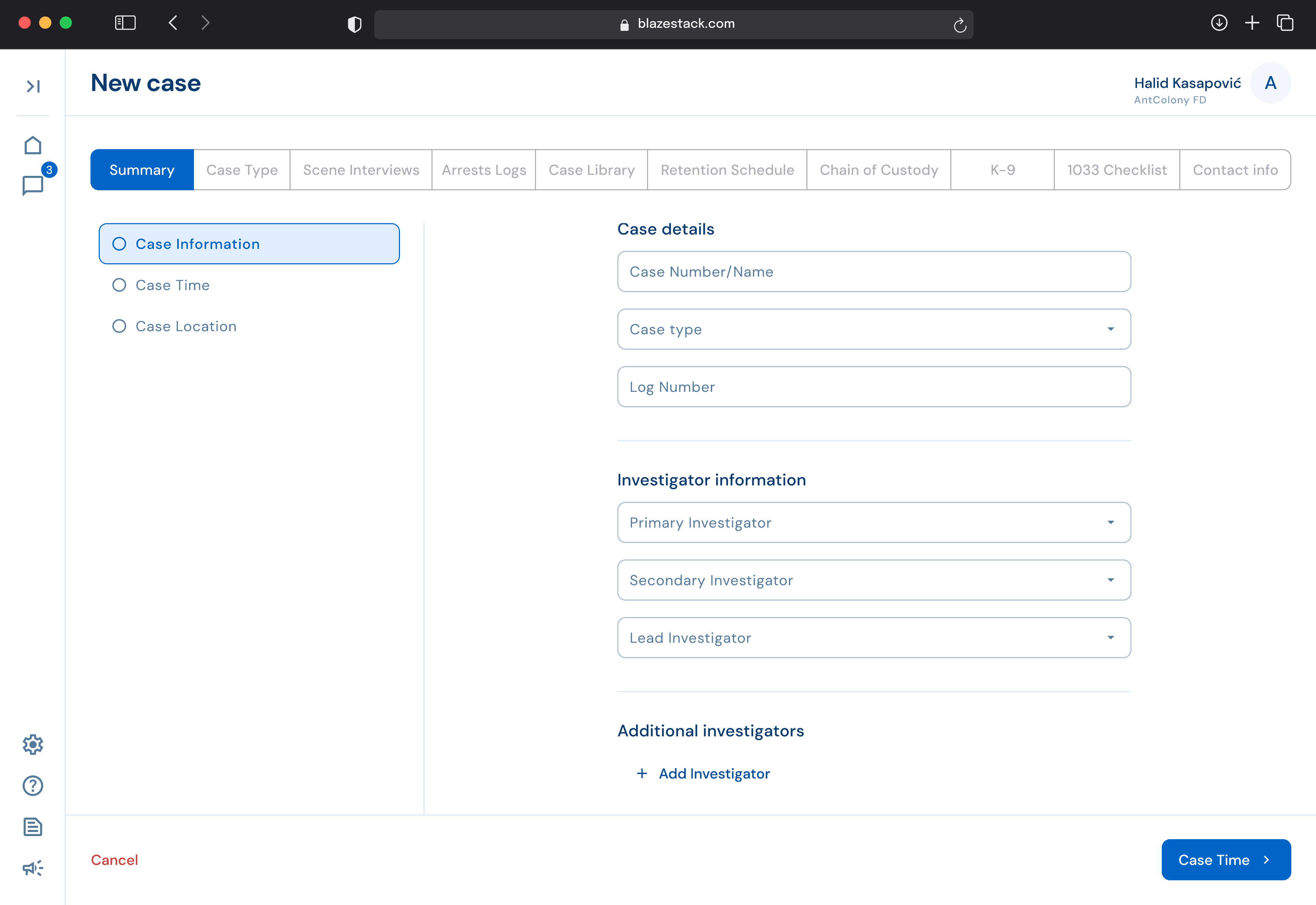
Auto-Save for Field Work
Fire investigators do not work at desks. They move between the scene, the office, and the field, often returning to a case across multiple sessions. We implemented auto-saving on every tab so that progress was never lost mid-entry. Investigators could close the case, return hours later, and pick up exactly where they left off, without worrying about losing work they had already done in the field.
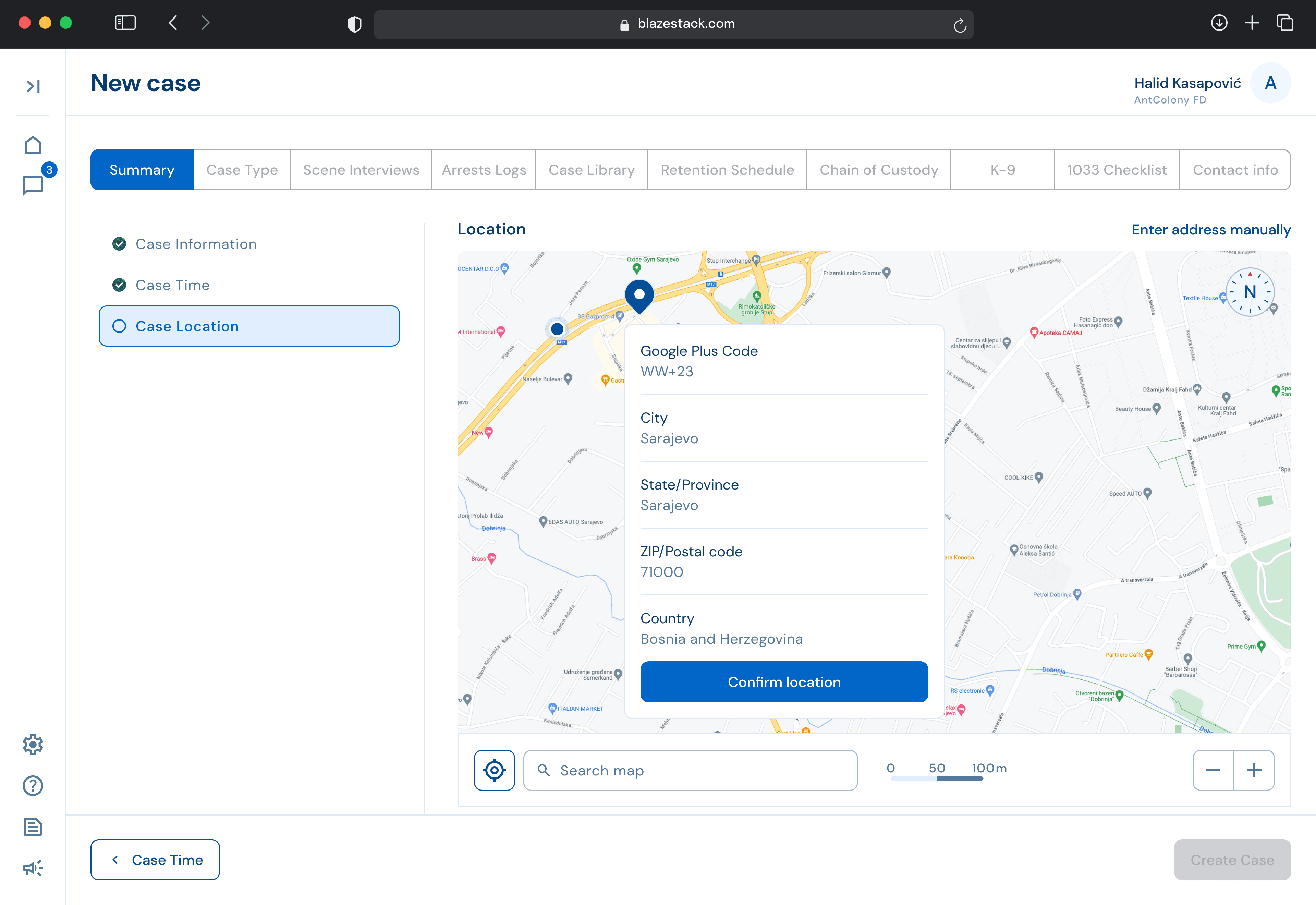
Clarity Over Information Density
Each open case surfaces key facts (case type, log number, primary investigator, incident time) without burying them in tabs. An activity log runs alongside the summary to track every action on the case, giving supervisors and investigators shared visibility without needing to chase status updates. Keeping this information in one view removed the need to navigate multiple screens for context.
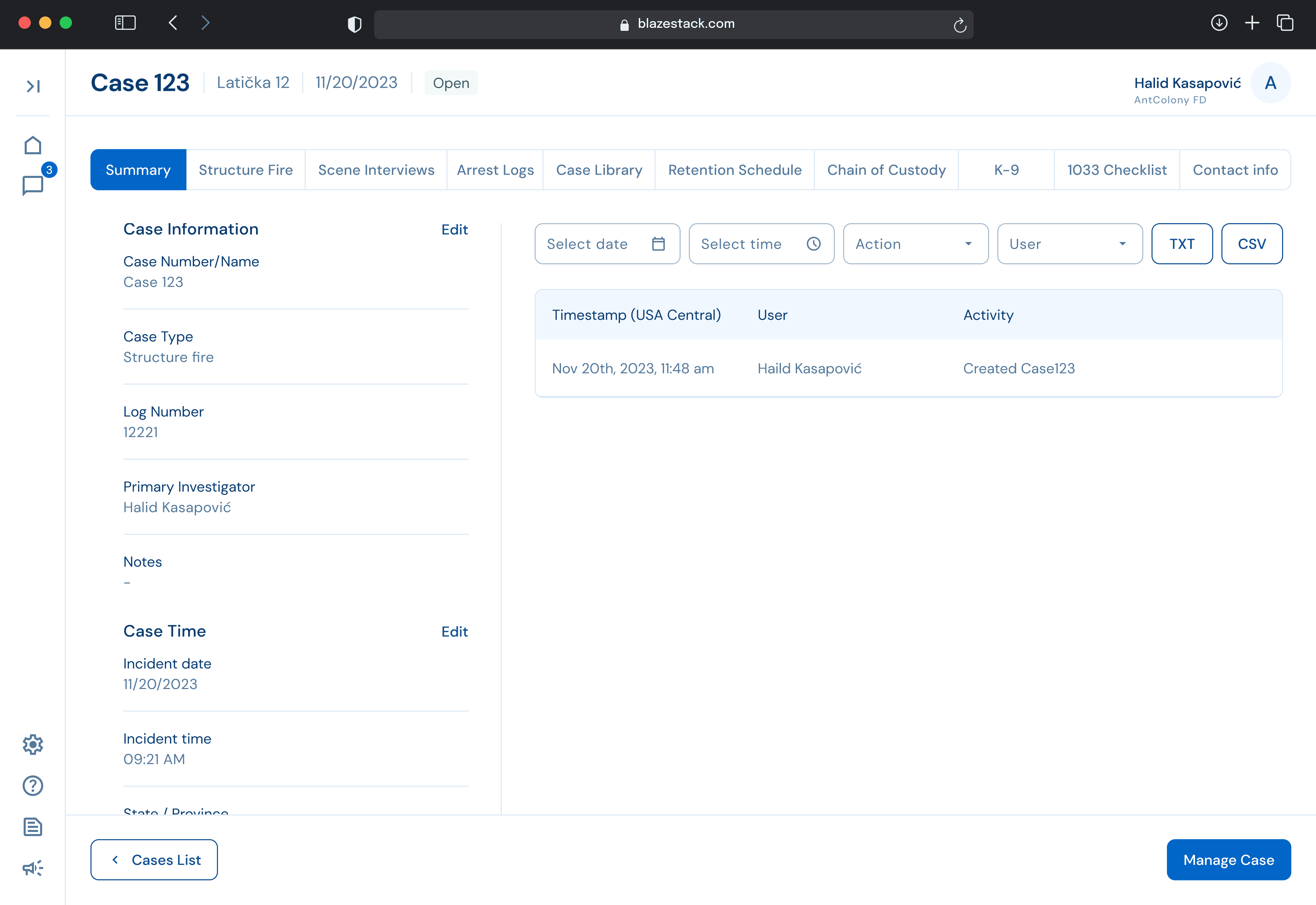
Making Checklists Usable
A structure fire investigation involves dozens of documentation sub-categories. Rather than presenting these as a single overwhelming form, we designed a stepped sidebar checklist that breaks the process into discrete, completable sections. Progress indicators show what is done and what remains, reducing missed documentation and giving investigators a clear sense of where they are in the process.
Consistent Data Through Structured Input
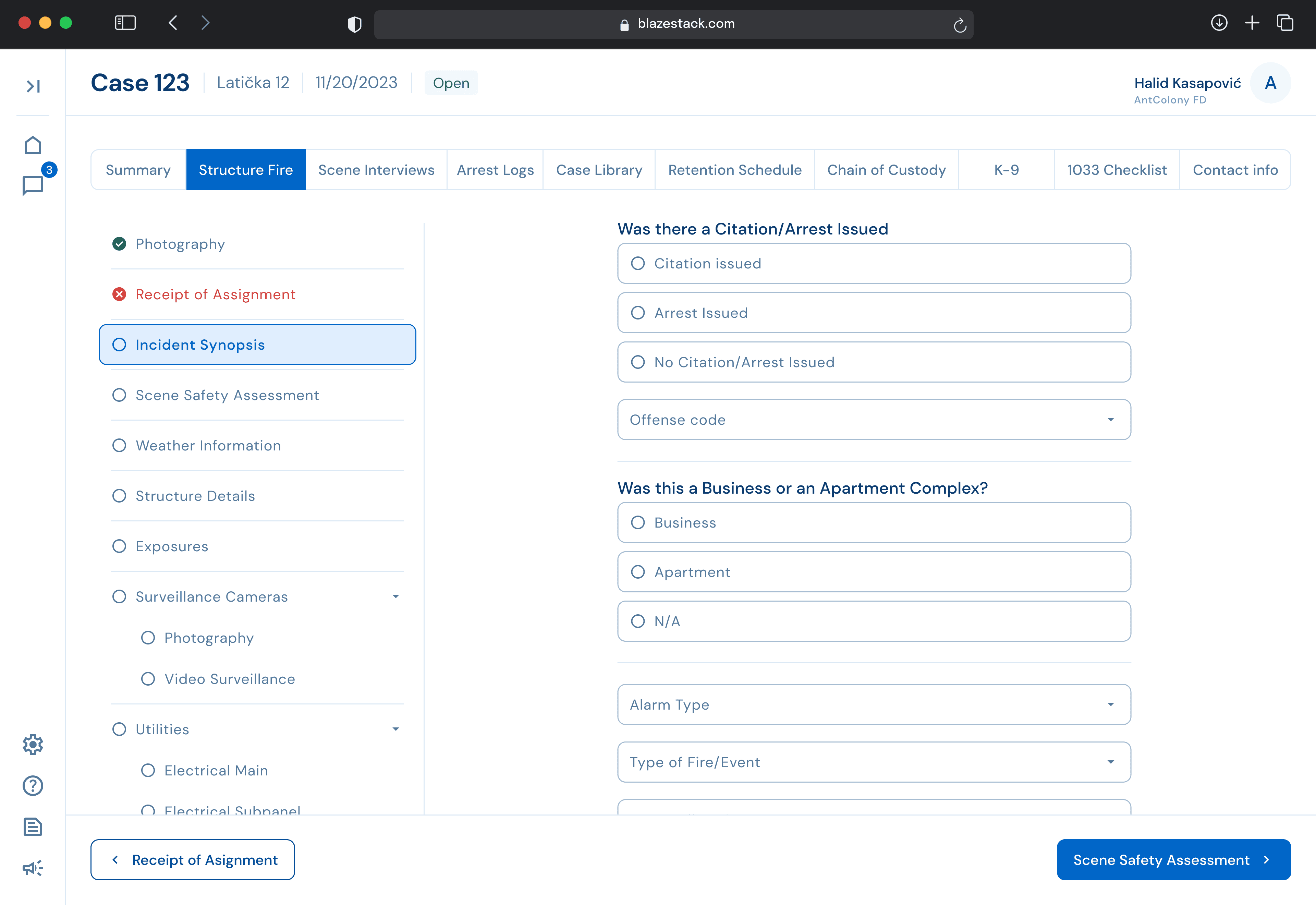
Open text fields in investigation reports introduce inconsistency that makes data hard to search, filter, and audit. We replaced free-text inputs wherever possible with structured selections: citation status, offense codes, building classification, alarm type. This preserved data quality at scale and made the platform useful not just for individual investigators, but for department-wide reporting.
A Design System Built for Scale
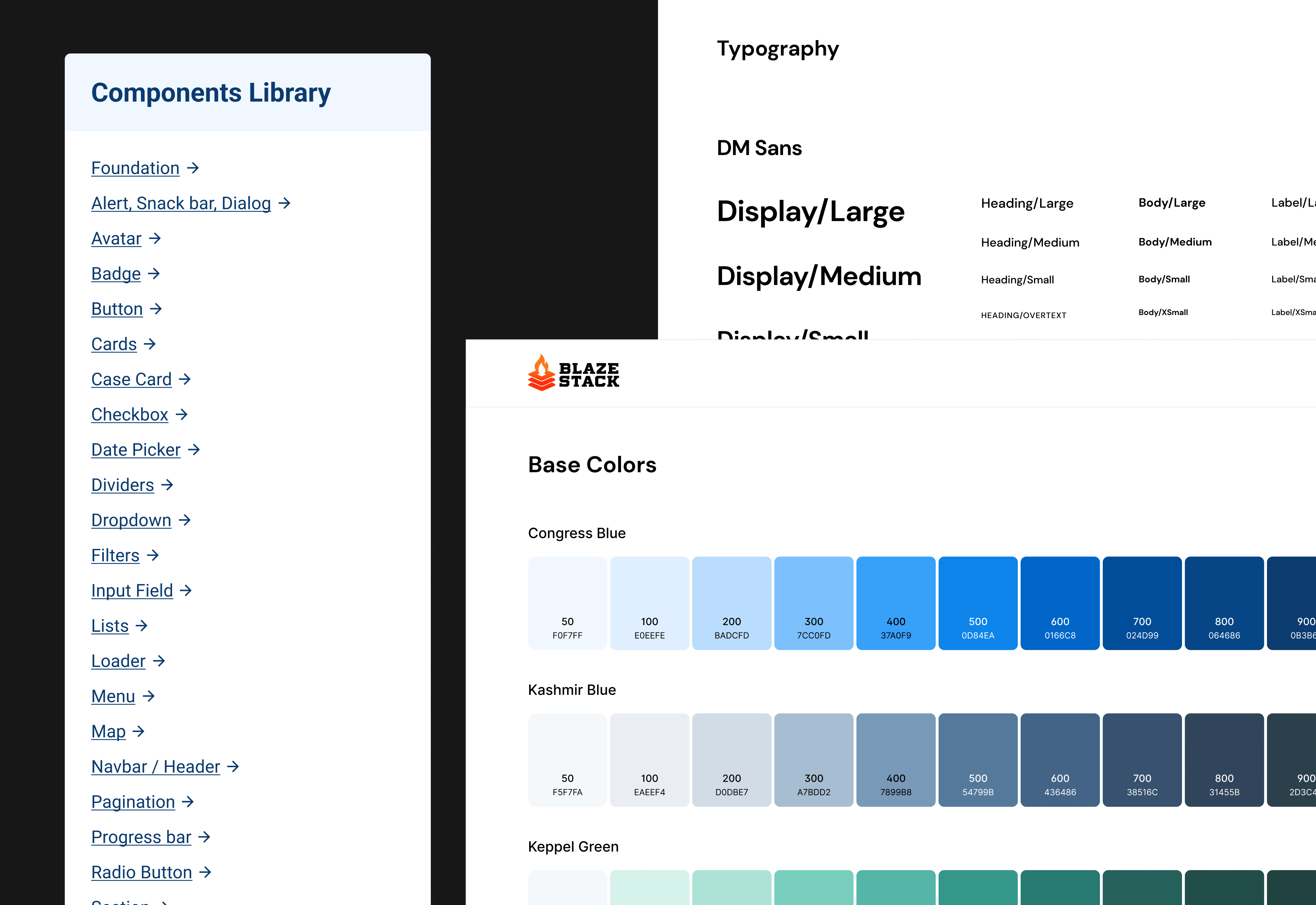
The highest-impact decision on this project was investing in a comprehensive design system before building out screens. With a platform this broad, spanning case management, checklists, maps, and reporting, a shared component library was essential. The result was a 20% increase in development efficiency, and a product that feels coherent across every surface despite its complexity.
Specs That Close the Design-Dev Gap
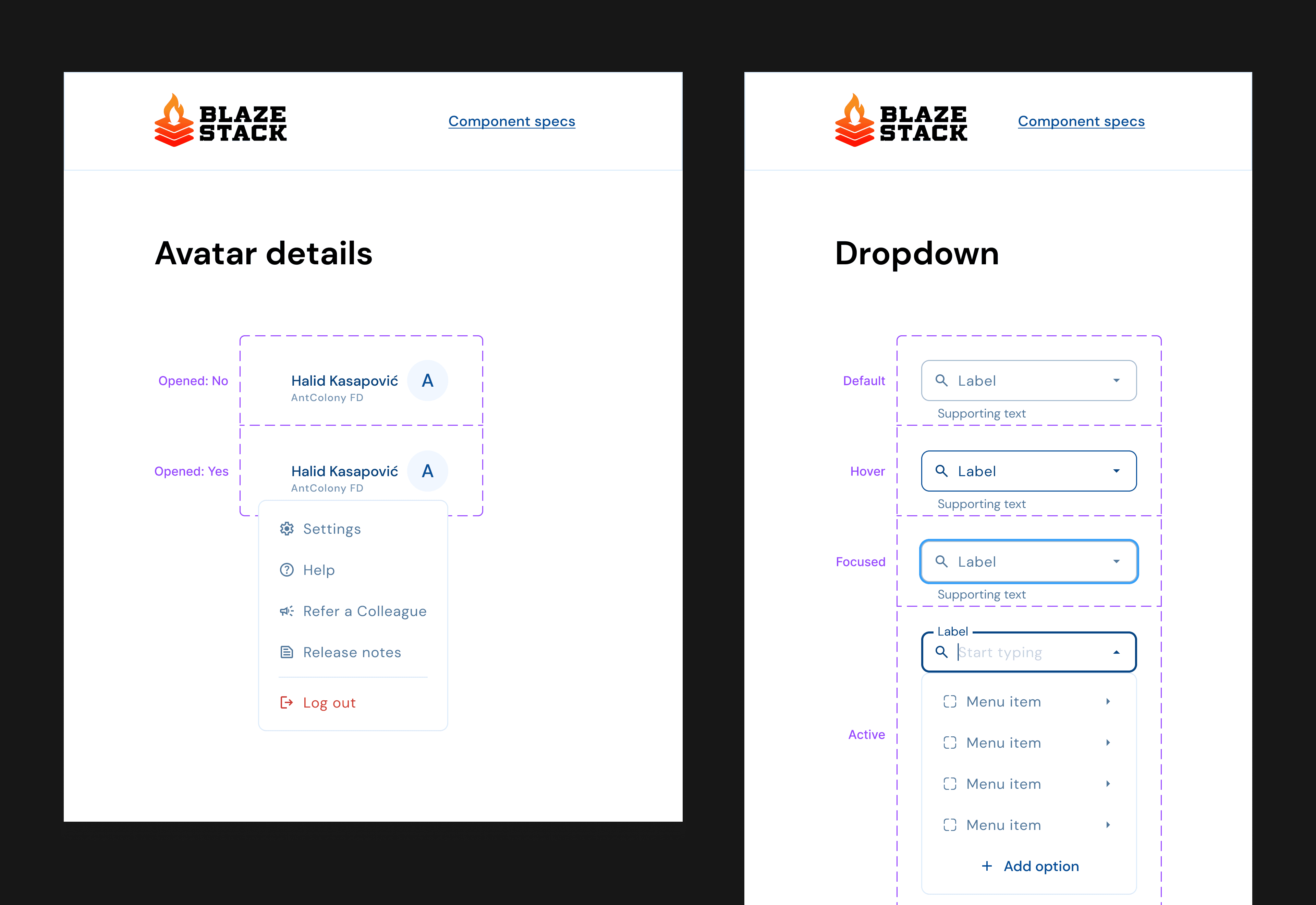
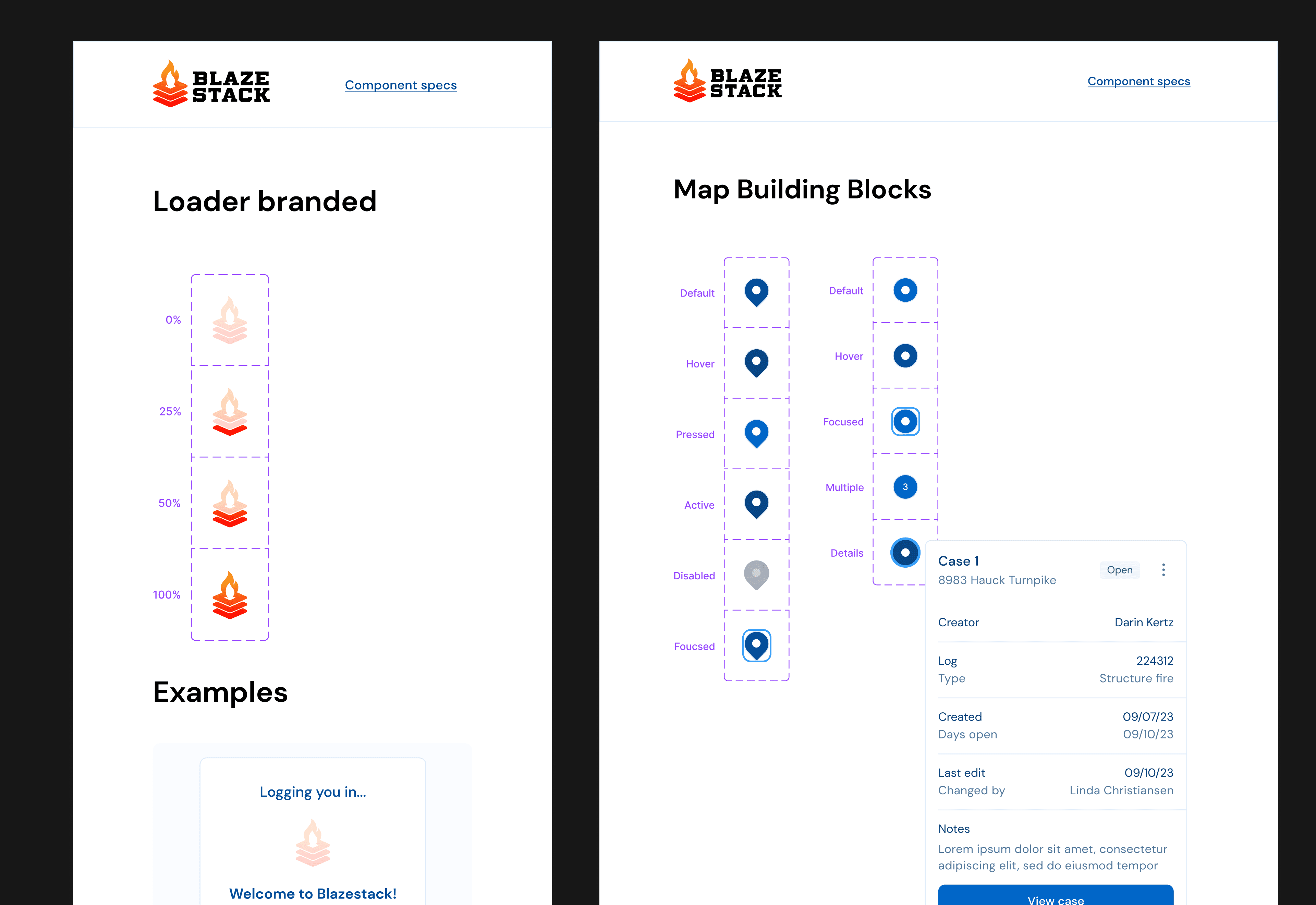
Every component in the library was documented with full interaction states and annotated specs, creating a shared language between design and engineering. By defining behaviour at the component level, we avoided the back-and-forth that typically accumulates on complex builds and kept the implementation true to the design intent.
Brand Integrity in Functional Elements
Design system work often stops at the component level, but we extended it to cover branded interactions, including a custom loader that uses the BlazeStack flame to reinforce identity during loading states. Map pins and case detail pop-overs were built as reusable, consistently styled building blocks. These details signal to users that the product is intentional and trustworthy, which matters in a high-stakes professional tool.
Complexity Without Compromise
BlazeStack demonstrates that complexity and usability are not at odds. By approaching the design system as a foundational investment and treating every interaction as an opportunity to reduce friction, we delivered a platform that investigators can move through quickly, without sacrificing the thoroughness that fire investigation demands.