HUB71.
HUB71 is one of the world's leading tech startup ecosystems, based in Abu Dhabi. Its value lies in the network: a curated set of service providers that startups can access as they grow. The challenge was building a platform that could handle the full lifecycle of service procurement, from discovering a provider through to contracting, status tracking, and ongoing communication, without the friction that early-stage companies typically face when engaging large corporate partners.
Early-stage startups needed to navigate complex corporate service procurement (legal, insurance, tech) without the specialist knowledge or bandwidth that process typically demands.
UX Design across the full service marketplace and request lifecycle. Led interaction design and structured the complex form flows and status-tracking patterns.
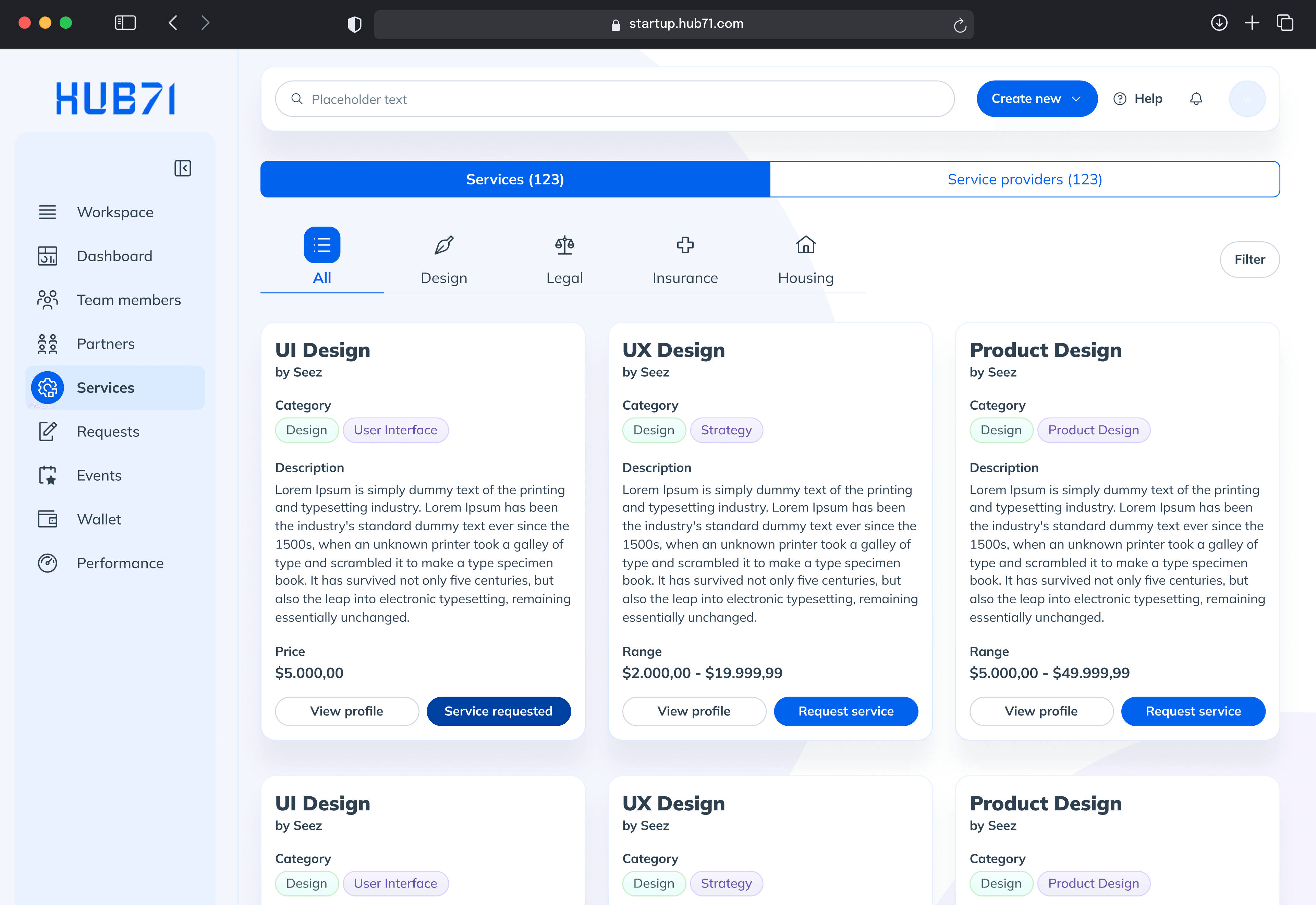
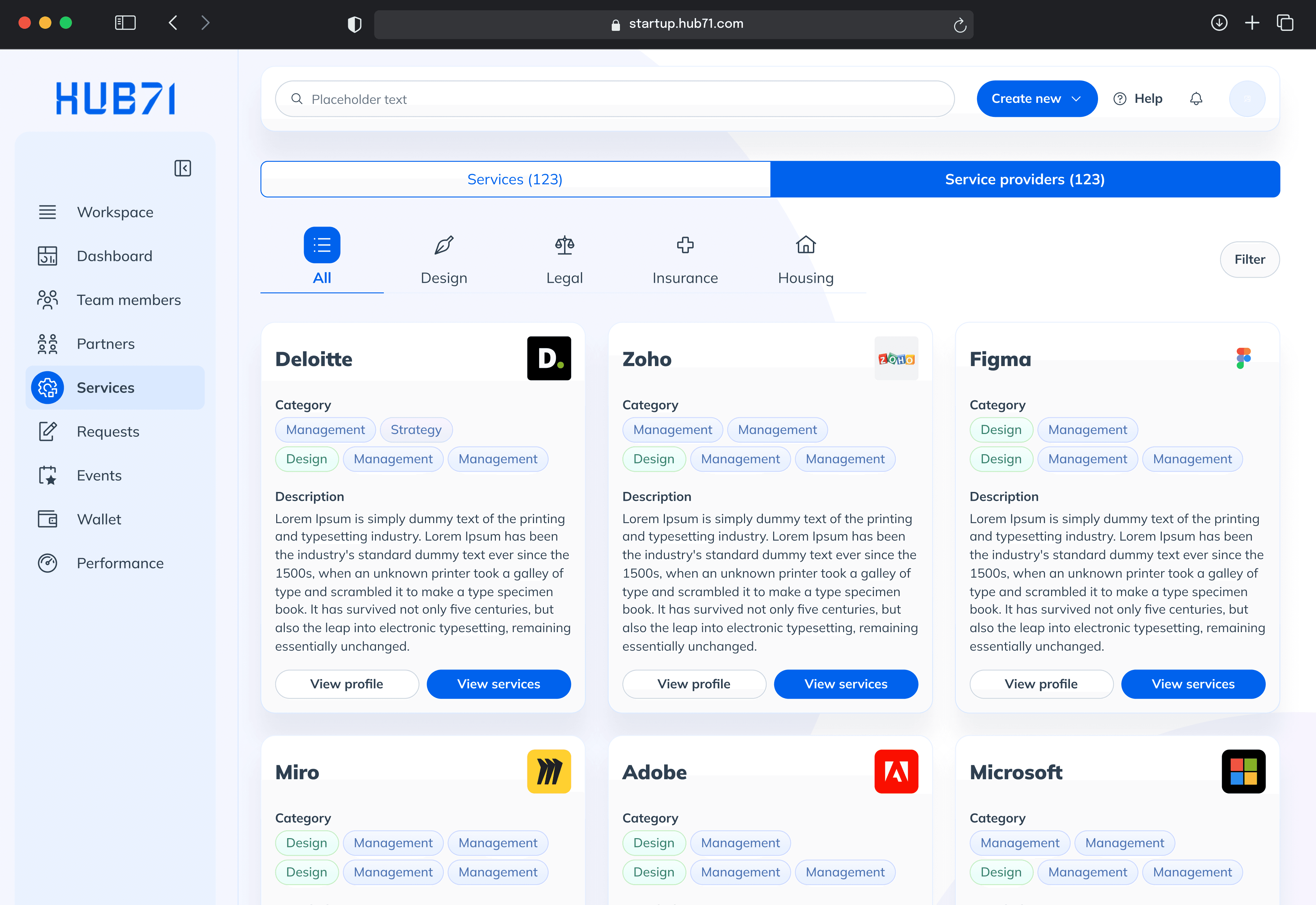
Built a unified service marketplace giving startups direct access to HUB71's full network of providers (legal, tech, insurance, design) from a single platform
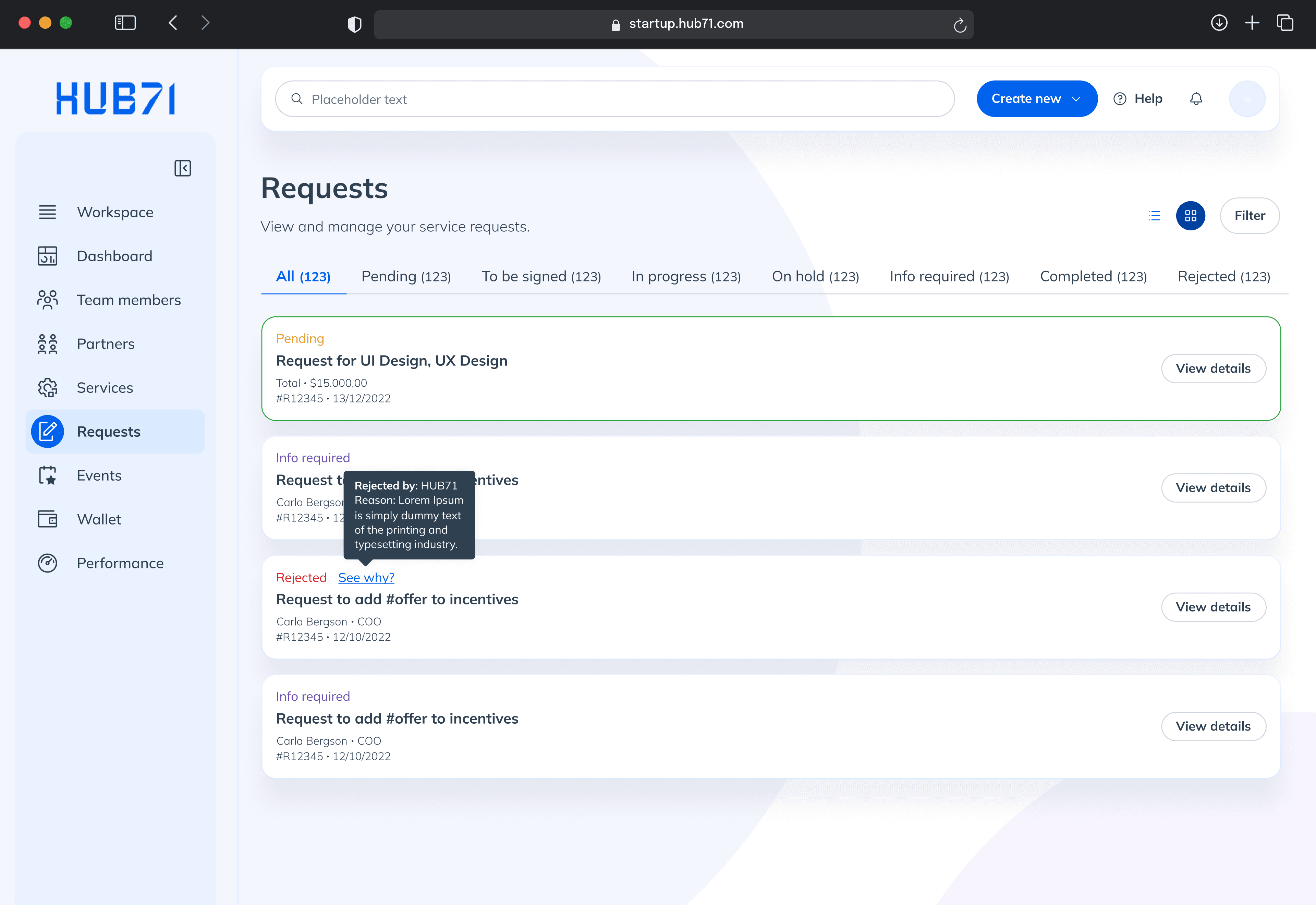
Designed a full request lifecycle with status tracking across seven stages, giving startups and providers a shared view of where every engagement stands
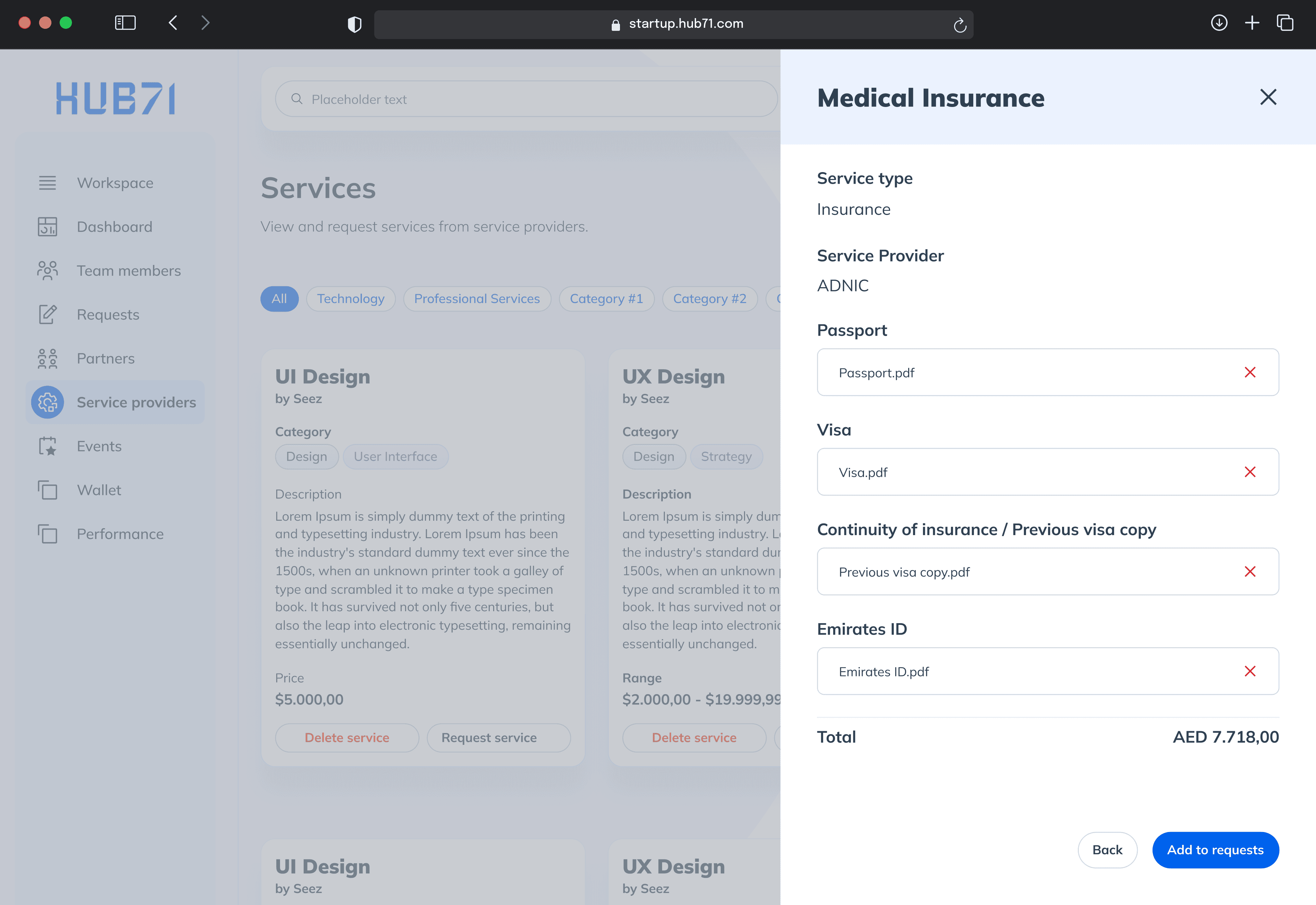
Structured complex service forms (including insurance with dependant configuration and document uploads) so startups can navigate high-stakes procurement without specialist knowledge
Making the Network Accessible
HUB71's core value is its curated network of service partners, but that value only lands if startups can actually find and engage those partners. Without a structured marketplace, discovery happened informally and inconsistently. We built a browsable catalogue so startups can identify the right provider for their current need, whether that is legal support, a design agency, or a software tool, without relying on introductions or manual coordination from the HUB71 team.
Clarity Before Commitment
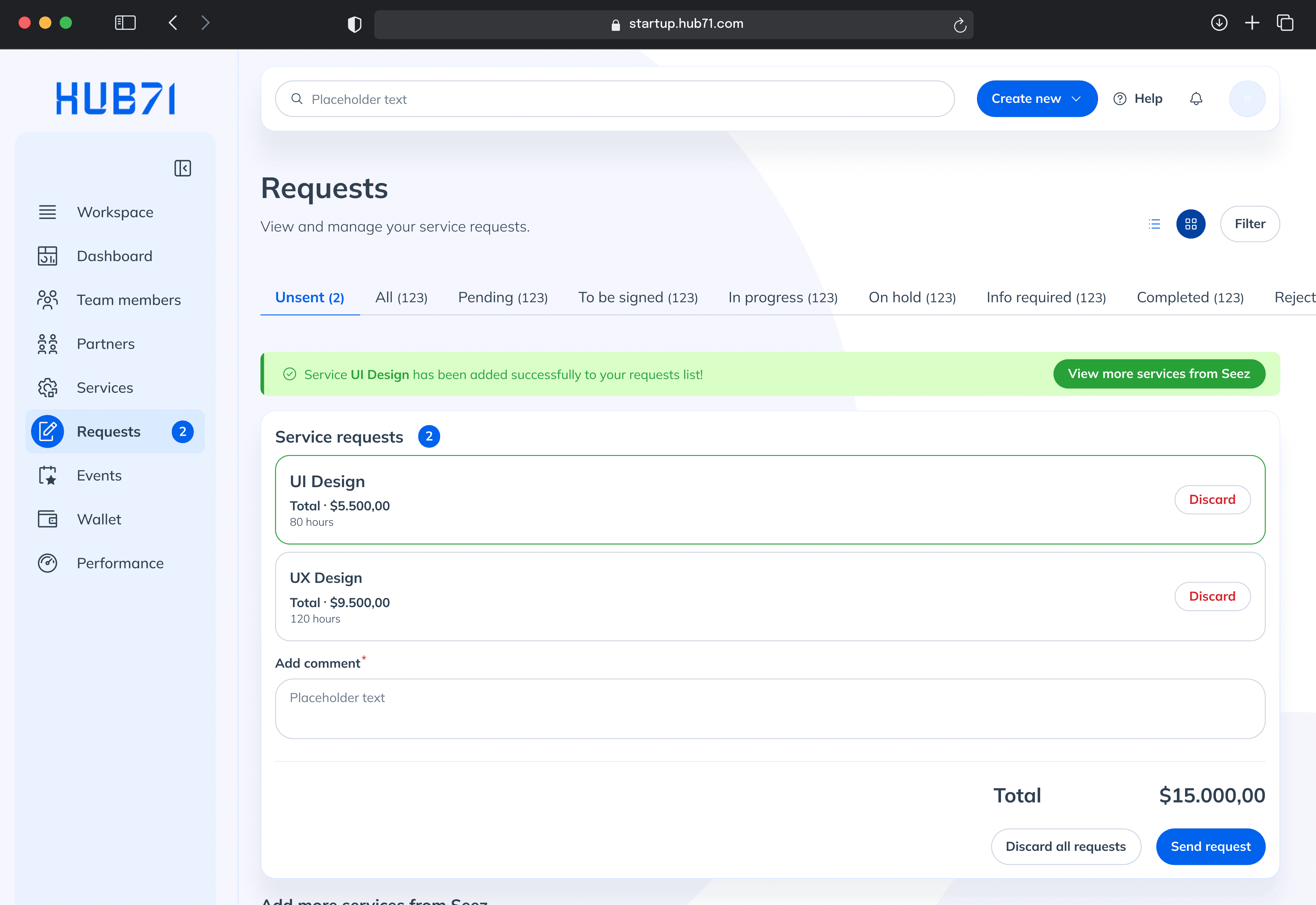
Startups engaging external services for the first time often do not have procurement experience. Costs can be opaque, and it is easy to commit to something before fully understanding the scope. We designed the request flow so startups could build up a basket across multiple services, see the full cost broken down, and add context for the provider, all before submitting anything. This reduced misaligned expectations and gave both sides a cleaner starting point for the engagement.
No More Chasing Status
One of the biggest frustrations for startups working with large service providers is simply not knowing where things stand. Requests go quiet. Emails go unanswered. We designed a request management system with a clear lifecycle so startups always know the current status of every engagement. When something is rejected, they can see why immediately, without needing to follow up.
Control Over an Engagement in Progress
Startup needs change quickly. A service that made sense at the time of request might need to be paused, modified, or withdrawn as priorities shift. We designed the request detail to give startups visibility into what they have committed to (pricing structure, hours, total) and the ability to act on it before it progresses. This was particularly important for hourly engagements where scope can drift.
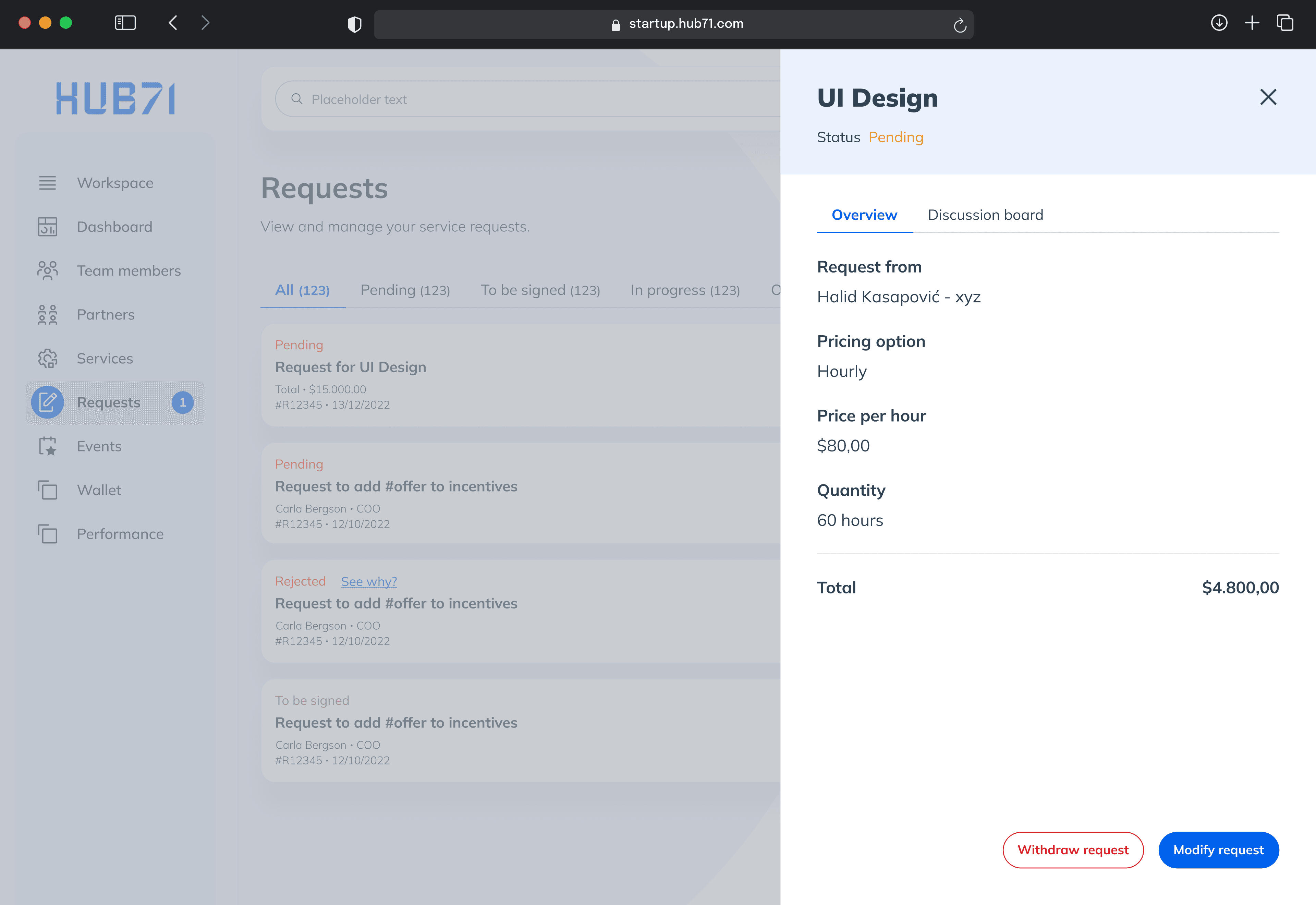
A Single Source of Truth for Every Engagement
Without a dedicated system, the records of a service engagement scatter across emails, messages, and file attachments. When something goes wrong, or when context needs to be established months later, piecing that together is painful. We built the request detail to hold everything in one place: the agreed terms, signed documents, and current status. Both the startup and the provider always have the same picture.
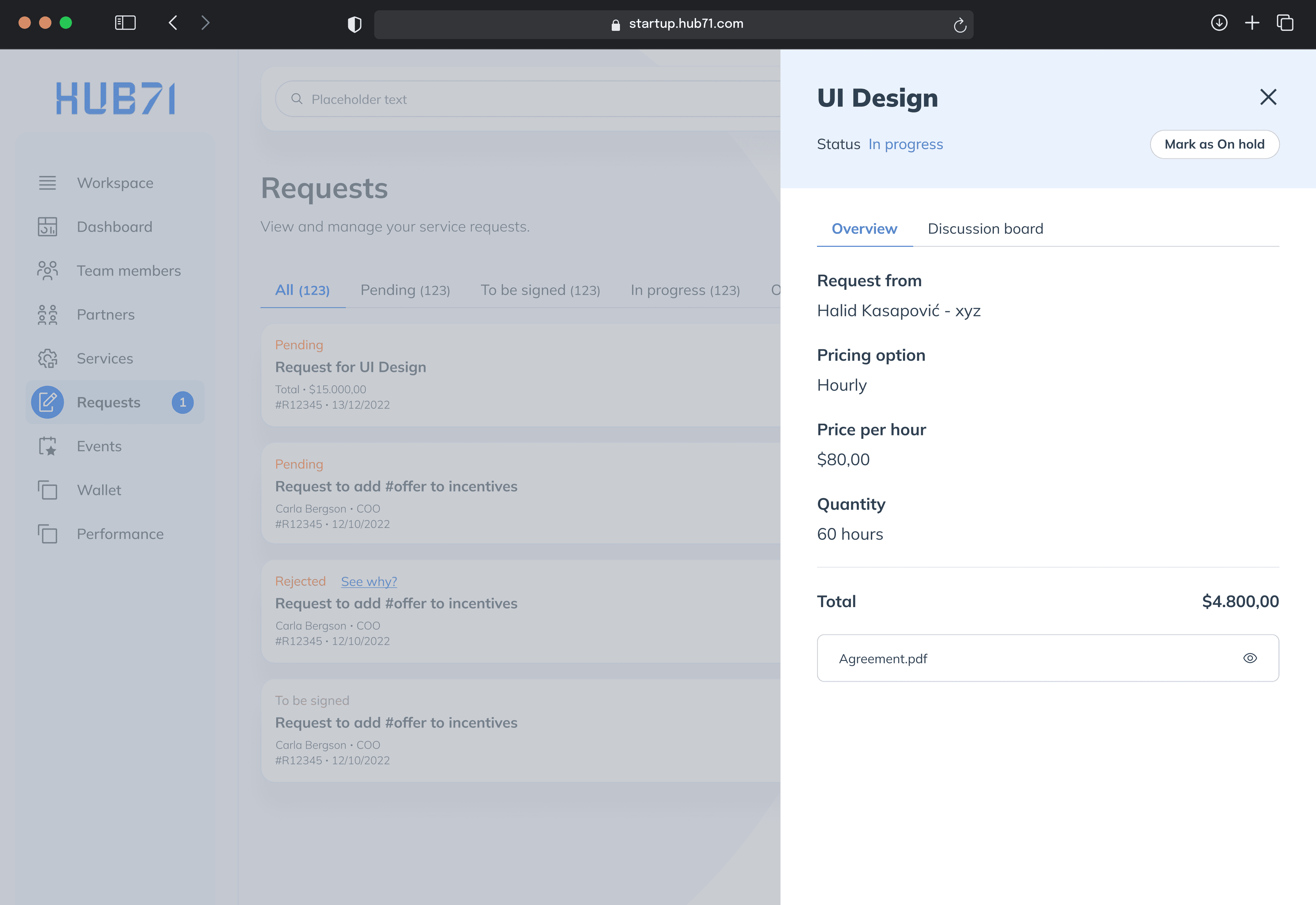
Communication Tied to the Work
Service relationships involve negotiation, clarification, and status updates, and when that communication lives in email or chat, it disconnects from the actual request. We introduced a discussion thread tied directly to each service request, with automatic system messages logging every status change. This gives startups and providers a shared record of how the engagement evolved, and removes the need to reconstruct history from scattered messages.
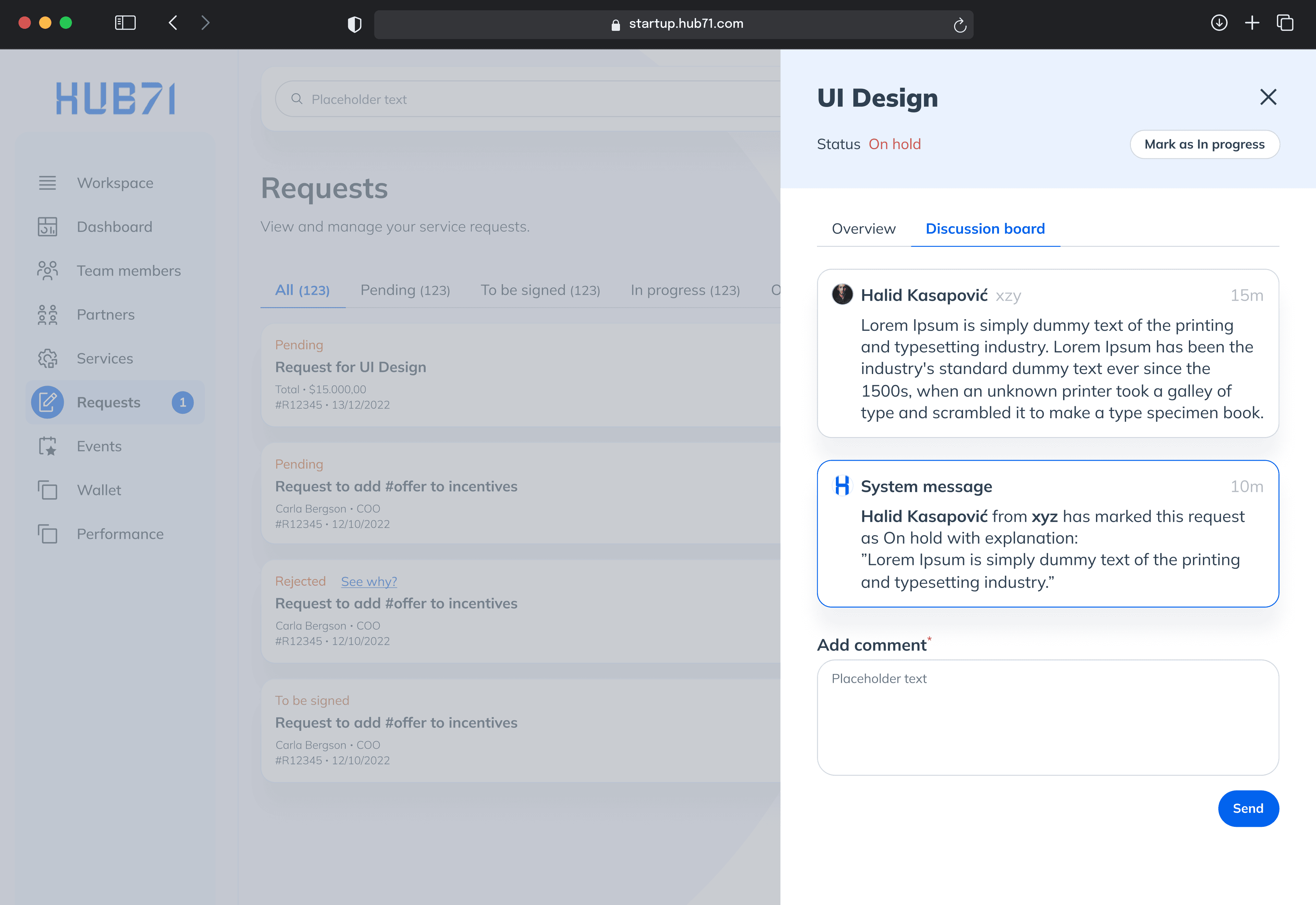
Opening Up Complex Benefits to Early-Stage Startups
One of HUB71's differentiators is giving startups access to enterprise-grade benefits they would normally only get at scale, including medical insurance for founders and their team. The challenge is that these services involve compliance questions, dependant eligibility, and residency rules that most startup teams are not equipped to navigate. We structured the request flow to guide startups through what is needed step by step, so they can access benefits that would otherwise require a dedicated HR function.
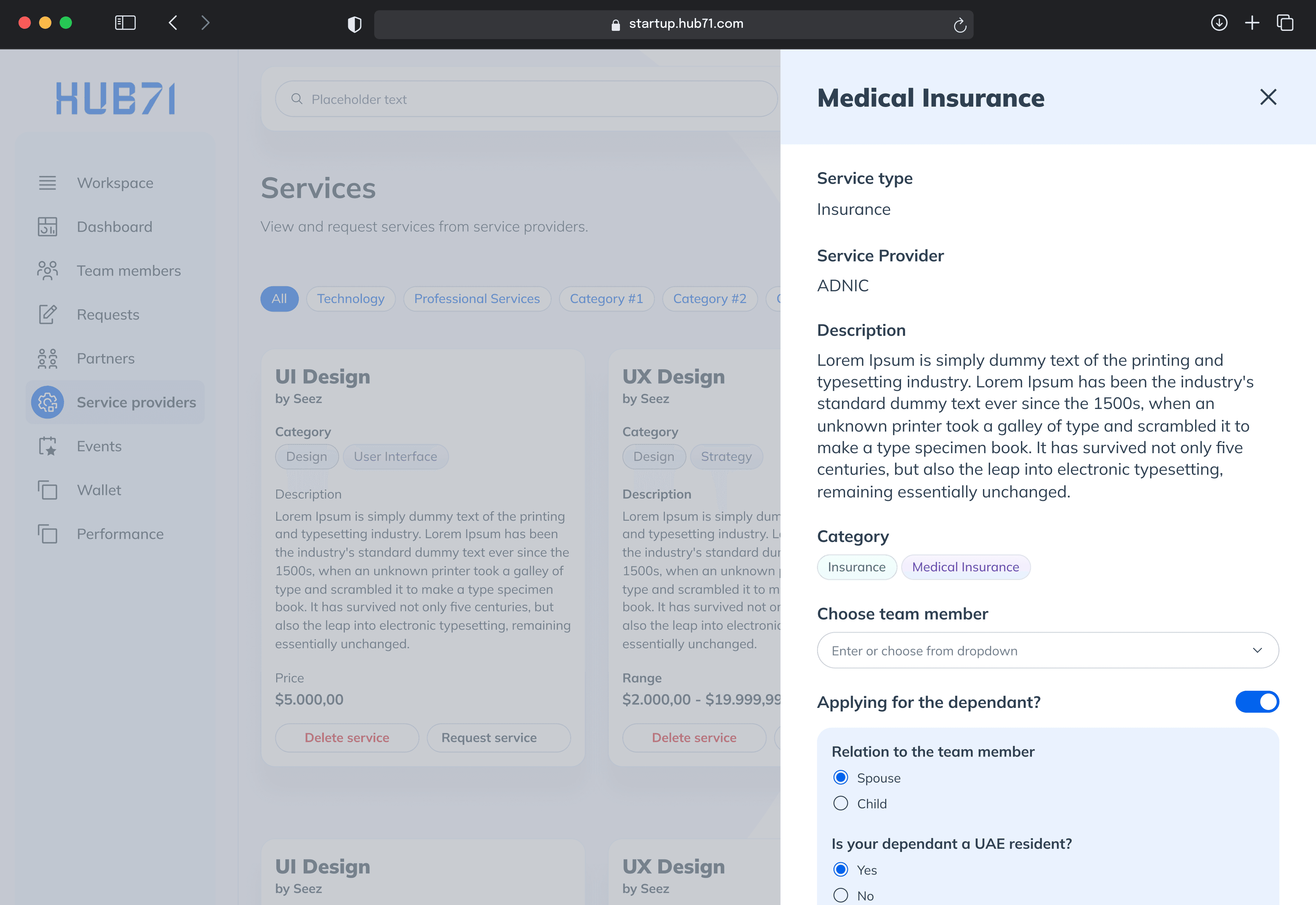
Removing the Email Back-and-Forth
Regulated services like insurance require documentation (passports, visas, Emirates IDs) and the typical process is a slow loop of requests and replies over email. We built document collection directly into the service request, so startups submit what is needed as part of the flow. For providers, it means receiving a complete package from the start. For startups, it means one less administrative thread to manage while they are focused on building their business.
An Ecosystem Platform That Does the Work
HUB71's value is its network. The design task was making that network usable, removing the operational overhead that early-stage startups do not have the bandwidth to absorb when they are trying to engage large service providers for the first time. By bringing discovery, procurement, communication, and documentation into one platform, we made the ecosystem's benefits accessible without the friction that typically comes with corporate partnerships.